Feed Your Gut, Skip the Hype: A Cook's Real Guide to Better Digestion
Walk down the supplement aisle at any Whole Foods or Target and you'd think a healthy gut was just a matter of swallowing the right capsule. Probiotic gummies, digestive enzymes, kombucha in seventeen flavors — the market for gut health products in the US topped $15 billion last year. And yet, for all that spending, a lot of people still feel bloated, sluggish, and just... off.
Here's the thing researchers keep saying that the wellness industry conveniently buries: the most powerful tool for digestive health isn't a supplement. It's your kitchen.
Your gut microbiome — that complex community of trillions of bacteria, fungi, and other microorganisms living in your digestive tract — responds far more dramatically to what you actually eat and cook than to any probiotic pill. Understanding that distinction changes how you shop, how you prep, and honestly, how you think about food altogether.
Why Probiotics Alone Aren't Moving the Needle
Probiotics aren't useless. For specific conditions like antibiotic-associated diarrhea or certain IBS subtypes, the clinical evidence is real. But for everyday gut maintenance in healthy adults? The picture is murkier than the marketing suggests.
Most commercially available probiotic supplements contain strains that don't reliably colonize your gut long-term. They pass through. What actually shapes the composition of your microbiome over time is the food environment you create — specifically, how much and what kinds of fiber you're feeding the bacteria already living there.
Think of it this way: you can keep releasing fish into a lake, but if the water quality is bad and there's nothing to eat, those fish aren't sticking around. The goal isn't to import more bacteria. It's to make your gut a place where beneficial bacteria want to thrive.
The Fiber Conversation We're Not Having
Everyone knows fiber is good for you. Fewer people know that fiber diversity matters more than fiber quantity — and that when different fibers arrive in your system can actually influence which bacterial communities get fed.
There are two broad categories worth understanding: soluble fiber, which dissolves in water and forms a gel-like substance (think oats, beans, apples, and flaxseed), and insoluble fiber, which moves through your system relatively intact (whole grains, leafy greens, the skins of most vegetables). Your gut bacteria feast on both, but they prefer them in combination.
A meal that pairs, say, roasted sweet potato with a handful of arugula and a scoop of white beans isn't just nutritionally balanced — it's offering your microbiome a layered buffet. Soluble fiber from the beans feeds slow-fermenting bacteria deep in the colon. The insoluble fiber from the greens keeps transit time healthy and feeds a different microbial community entirely. That diversity of input is what researchers call a high-fiber, varied diet, and it consistently outperforms single-source supplementation in microbiome studies.
Timing also plays a role. Eating fiber-rich foods spread across your meals — rather than front-loading a giant salad at lunch and then eating refined carbs for the rest of the day — keeps fermentation activity more consistent and reduces the gas and bloating that can come from suddenly overwhelming your system with bulk.
The Fermented Foods Worth Actually Cooking With
Not all fermented foods are created equal, and the ones getting the most shelf space aren't always the most useful.
Yogurt remains one of the most well-studied sources of live cultures, but the key is buying plain, full-fat varieties with active cultures listed on the label. Flavored yogurts with added sugar largely undermine the benefit. Strained Greek yogurt and labneh (a thicker Middle Eastern style) are both excellent bases for dressings, dips, and sauces that bring live cultures into savory cooking without any sweetness.
Kefir is fermented milk with a broader range of bacterial strains than most yogurts, and it's tangy enough to use as a buttermilk substitute in pancakes, marinades, or baked goods. If dairy isn't your thing, water kefir is a legitimate alternative.
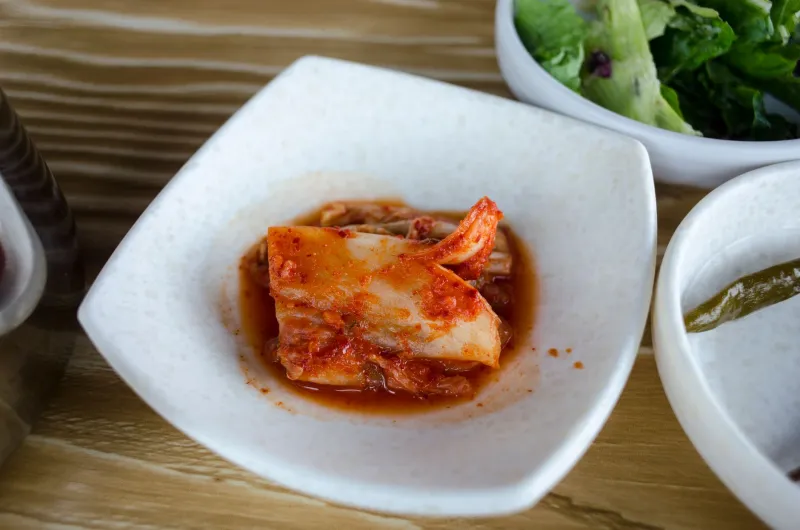
Kimchi and sauerkraut — the real stuff, refrigerated and unpasteurized, not the shelf-stable jarred versions — are genuinely useful. They're also incredibly easy to use in cooking. Stir kimchi into scrambled eggs, fold sauerkraut into grain bowls, or use the brine from either as a punchy acid in vinaigrettes. The fermentation byproducts, including short-chain fatty acids, have shown real benefits for gut lining integrity in emerging research.
Miso deserves more credit than it gets outside of Japanese cooking. A tablespoon of white miso dissolved into a warm (not boiling) broth preserves its live cultures and adds a savory depth that's hard to replicate. Same goes for tempeh — fermented soybean cake that's firmer than tofu, takes on a marinade beautifully, and offers both protein and probiotic benefit in one ingredient.
A note on heat: cooking fermented foods at high temperatures kills the live cultures. That doesn't make them nutritionally worthless — the prebiotic fiber and nutrients remain — but if you're specifically after the microbial benefit, add miso off the heat, serve kimchi as a cold topping rather than stir-frying it, and use yogurt in cool applications.
Prebiotic Foods: The Unsung Heroes
If probiotics are the bacteria, prebiotics are what feed them. And this is where home cooks have an enormous advantage over anyone relying on supplements.
Foods high in prebiotic compounds include garlic, onions, leeks, asparagus, Jerusalem artichokes, slightly underripe bananas, and cooked-then-cooled starches like rice and potatoes. That last category is particularly interesting: when you cook rice or potatoes and then refrigerate them, the starch structure partially converts into something called resistant starch, which your small intestine can't digest but your gut bacteria absolutely can.
This is the science behind why a cold potato salad or next-day rice in a grain bowl is actually, in a specific way, better for your gut than the freshly cooked version. It's not a dramatic effect, but it's real — and it's the kind of thing that makes meal prep feel genuinely purposeful rather than just convenient.
Building Meals With Your Microbiome in Mind
You don't need to overhaul your entire approach to cooking. The shift is more about layering intention into what you're already doing.
Start by thinking about every meal as an opportunity to hit two or three different fiber sources. A stir-fry with broccoli, edamame, and brown rice. A soup built on a base of onions and garlic, loaded with lentils and kale. A grain bowl with roasted vegetables, a legume, and a cold-cooked grain.
Add a fermented element where it makes sense — a spoonful of yogurt here, a side of kimchi there, miso in the dressing. Don't force it, but look for the natural fit.
And maybe most importantly, eat a wide variety of plant foods across the week. A landmark study published in Cell found that people who ate more than 30 different plant varieties per week had significantly more diverse microbiomes than those eating fewer than 10 — and diversity is the single most consistent marker of a healthy gut ecosystem.
Thirty sounds like a lot until you start counting: every vegetable, fruit, legume, whole grain, nut, seed, and herb counts separately. A single grain bowl with farro, roasted beets, sunflower seeds, arugula, chickpeas, and a lemon-tahini dressing? That's already six.
Your gut doesn't need a supplement routine. It needs a kitchen that's working for it.