The Kids' Menu Is Training Your Palate Too
Photo: Hans Bernhard Schwerin, Public domain, via Wikimedia Commons
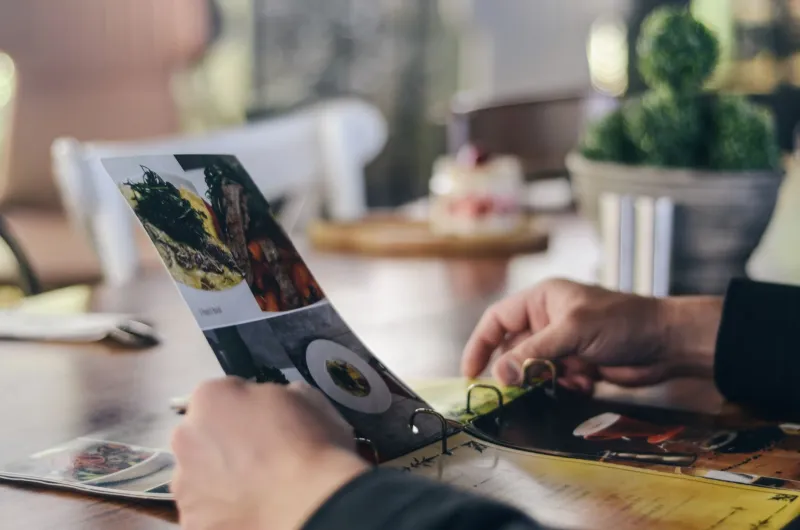
Walk into almost any American restaurant and you'll find the same document tucked into the back of the menu: a laminated card with a cartoon mascot and four options, three of which are beige. Chicken tenders, mac and cheese, buttered pasta, grilled cheese. Sometimes a burger. Vegetables appear as a sad pile of carrot sticks or, more often, not at all.
The kids' menu is a business decision, and a clever one — it's cheap to produce, reliably accepted, and it saves parents the risk of paying for a plate that goes untouched. But it's worth asking what it teaches. Because a menu is a curriculum, and this one has been quietly instructing a generation that 'food I like' and 'food for grown-ups' are two separate categories.
How Beige Became the Default
There's a developmental story here, and it's not wrong exactly. Young children do go through a neophobic phase, usually peaking somewhere around ages two to four, when new foods get treated with suspicion. Textures can be genuinely overwhelming. Bitter flavors read differently to kids than to adults. Restaurants responded to that reality by removing every variable, and it worked so well that the logic spilled out of the dining room and into the home kitchen.
Somewhere along the way, 'kid-friendly' stopped meaning 'approachable' and started meaning 'flavorless.' The bar shifted from food a child can eat to food no child has ever refused. Those aren't the same standard, and the gap between them is where a lot of family dinners got lost.
What Repetition Does to a Palate
Palate is trainable. That's the whole point of eating a cuisine for years and then suddenly craving it — the mouth learns. The flip side is also true: a palate that gets chicken nuggets and plain noodles four nights a week is being trained, quite efficiently, in the direction of salt, fat, and uniform texture.
And the training doesn't stop at childhood. Adults who grew up on narrow menus often carry that narrowness into their thirties and forties, ordering the same three things, quietly avoiding anything that requires chewing. We tend to talk about picky eating as a phase kids grow out of. Often it's a habit everyone ages into together.
Dinner Isn't Actually a Negotiation
Here's the part that surprises a lot of parents: the goal isn't to get a child to eat broccoli tonight. It's to keep broccoli on the table, unremarkably, for months. Research on food acceptance consistently points to repeated, low-pressure exposure — often cited as somewhere in the range of eight to fifteen tries before a food becomes familiar, and familiar is most of the battle.
That means a single rejected bite is not a failure. It's rep one of twelve. The failure mode isn't refusal; it's removal. Once a food stops appearing, the count resets to zero.
One Meal, With a Safety Net
The mostworkable middle path, and the one feeding therapists tend to land on, is a shared meal with a guaranteed win built in. Not a separate kids' plate. Not a standoff. Just: everybody eats the same thing, and the meal includes at least one component you know your kid will eat without drama — bread, rice, fruit, whatever that is for your household.
That's it. The safe food isn't a bribe or a surrender; it's the thing that keeps the table calm enough for the rest of the meal to be explored. What you don't do is short-order cook, because short-order cooking teaches exactly the lesson you're trying to unteach: that the way to get a different dinner is to outlast your parents.
Some practical guardrails that help:
- Serve family-style when you can. Passing bowls lets a kid take a small portion rather than receiving a plate they didn't build.
- Keep the pressure low. 'You don't have to eat it' is a complete sentence. No three-bite rule, no clean-plate club.
- Change one variable at a time. Same vegetable, new preparation. Roasted instead of steamed. That's exposure, not novelty overload.
- Put the unfamiliar thing next to the familiar thing, not in place of it. Contact counts.
- Let them participate. Kids who tear the kale or squeeze the lemon are dramatically more likely to taste the result. It's not a trick, it's ownership.
Texture Is the Real Frontier
Most 'picky eater' conversations are about vegetables, but texture is usually the actual barrier — the sliminess of a mushroom, the graininess of a mashed something, the fibrous snap of a green bean. If a kid rejects a food, it's worth noticing how it was rejected. Flavor complaint and texture complaint need different solutions.
Texture problems respond to form: crispy instead of soft, pureed instead of chunky, raw instead of cooked. A roasted cauliflower floret with a charred edge is a completely different food from a steamed one, and it's often the one that gets eaten.
What Not to Do
Don't make dessert contingent on vegetables — that elevates dessert and diminishes dinner. Don't label foods as 'grown-up food,' even jokingly, because you're handing over a reason not to try them. Don't turn the table into a lecture about nutrition during a meal; the science on that is fairly clear that pressure backfires. And don't panic-rewrite the menu mid-meal, because the plate you replace tonight becomes the plate you'll be replacing for years.
The Long Game
Nobody's arguing that a tired parent on a Tuesday should refuse a box of mac and cheese. Convenience has its place, and a fed kid is the first priority. The argument is about defaults — about whether the beige plate is the exception or the architecture.
The realistic ask is smaller than overhauling your family's diet. Keep the shared meal. Keep one safe food on the table. Keep offering the thing that got refused last week. Keep the restaurant kids' menu as an occasional convenience rather than the definition of what your child eats.
Do that for a couple of years and something odd happens: the menu expands on its own. Not because anyone won an argument, but because nobody stopped showing up to the table with the same food.