Your Lab Results Came Back. Now What's for Dinner? A Real Kitchen Plan for Borderline Cholesterol
There's a particular kind of whiplash that happens in a doctor's office in mid-January. You walked in feeling fine. You walk out holding a printout with words like LDL, HDL, and triglycerides circled, and a nurse's cheerful parting shot: "Just watch your diet."
Watch your diet. Great. Watch it do what, exactly?
If your recent lab work flagged your cholesterol as borderline high, you're in enormous company—roughly one in three American adults gets some version of this conversation. And almost all of them leave with the same vague dread and zero actual cooking instructions. So let's fix that. Not with a list of forbidden foods, but with a strategy for the kitchen you already have.
First, Decode the Jargon (It's Less Scary Than It Looks)
Your lipid panel is really just three or four numbers wearing lab coats:
- LDL is the one your doctor circled. Think of it as the cholesterol that lingers in your bloodstream instead of getting cleared out. Lower is generally better.
- HDL is the cleanup crew—it escorts cholesterol back to the liver. Higher is better here.
- Triglycerides are your blood's fat-storage molecules, and they respond fast to things like excess sugar and alcohol.
Here's the encouraging part: food influences all three, and not in the way most people assume. Dietary cholesterol (the stuff in eggs and shrimp) matters far less for most people than the type of fat and fiber you eat day to day. Which means your grocery cart—not your fear of egg yolks—is where the real leverage lives.
The Soluble Fiber Play (Your Most Underrated Move)
If you remember one thing from this article, make it this: soluble fiber is genuinely good at lowering LDL. It works like a sponge in your digestive tract, binding to cholesterol-rich bile so your body has to pull LDL from the blood to make more.
The catch? Most Americans get about half the fiber they need. The fix isn't a supplement—it's a shopping pattern:
- Oats and barley for breakfast rotation duty (yes, actual rolled oats, not the sugary packets)
- Beans and lentils three or four times a week—chili, black bean tacos, a lentil soup that takes 40 minutes
- Apples, citrus, and berries as your default fruit, since these are soluble-fiber standouts
- Okra and eggplant if you want to get a little Southern about it
None of this is glamorous. All of it works. A dietitian would tell you that adding a daily bowl of oatmeal or a cup of beans is one of the most evidence-backed kitchen moves you can make after a scary lab result.
Rethink Your Fats Without Demonizing Them
The old advice—"avoid all fat"—turned out to be wrong and made food taste terrible. The current, better picture: swap the fats that nudge LDL up (butter, bacon fat, tropical oils) for ones that nudge it down or leave it alone.
Practically, that looks like:
- Olive oil as your workhorse, both for sautéing and for finishing
- Avocado oil when you need a higher smoke point
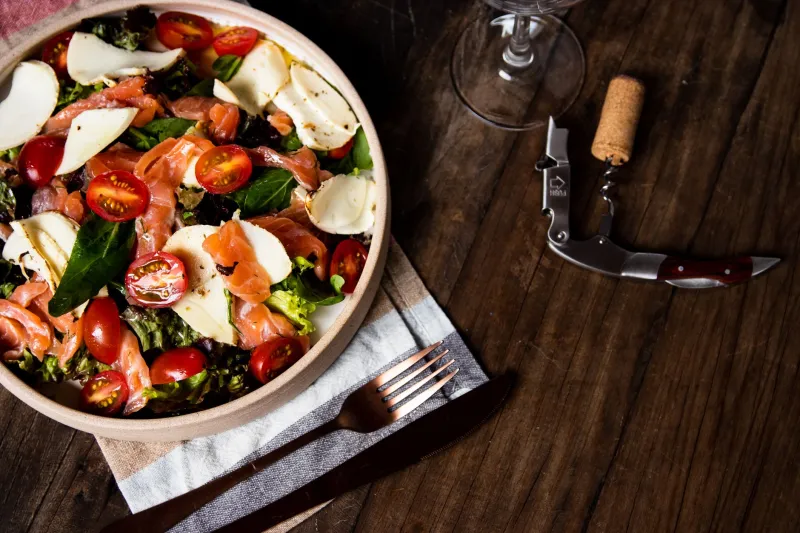
- Fatty fish like salmon or sardines twice a week for omega-3s, which mostly work on triglycerides
- Nuts as a snack instead of chips—a small handful a day shows up in the research again and again
You don't have to banish butter. Treat it like the good parmesan: a deliberate accent, not the base of the whole dish.
Menu Planning When You're Motivated (and Then When You're Not)
Week one after a lab result, motivation is sky-high. Week six, it's a memory. Plan for both versions of yourself.
Build a short roster of five or six "cholesterol-friendly default dinners" you can make without thinking—sheet-pan salmon with broccoli, white bean and kale soup, turkey chili, whole-wheat pasta with sardines and lemon. When you're tired, the healthy choice should be the easy choice, not a project.
And be honest about restaurant life. You don't have to skip Friday tacos; just tilt the order—beans instead of rice, extra avocado, skip the queso dip that's basically warm heavy cream.
About That Emotional Whiplash
One more thing worth saying: a borderline number is not a diagnosis, and it is not a verdict on your character. Cholesterol is shaped by genetics, age, and hormones as much as by what you eat. Plenty of marathon runners get flagged. Plenty of the change required is slow, cumulative, and—frankly—delicious.
Use the number as information, not shame. Follow up with your doctor, ask about retesting in three to six months, and in the meantime, cook like someone who plans to be at this table for a long, long time.
Your kitchen can't rewrite your genes. But it can absolutely move that number—and dinner's going to be better than you think.