Turkey Fatigue Is Real: A Practical Plan for Turning Holiday Leftovers Into a Week of Good Meals
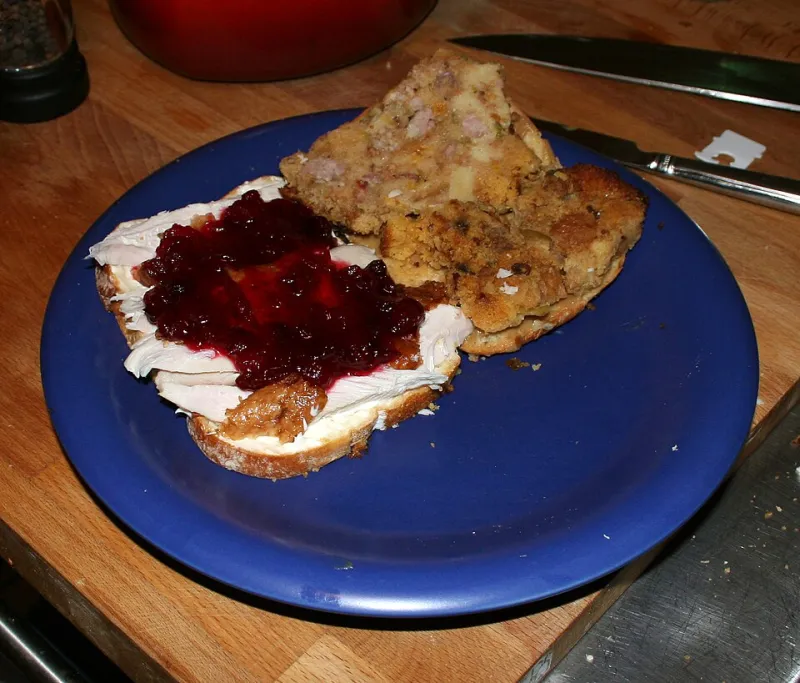
Photo: Marshall Astor, CC BY-SA 2.0, via Wikimedia Commons
There is a specific moment, usually around 9 p.m. on the second night after a big holiday meal, when the container of mashed potatoes stops looking like abundance and starts looking like an obligation. You open the fridge, you see the foil-wrapped remains of a very good meal, and you close the fridge and order something. No judgment. But that fridge is sitting on a week of dinners if you stop treating leftovers as plates and start treating them as ingredients.
That shift is the entire game. A plate of turkey, stuffing, and green bean casserole reheated is a sad rerun. The same components broken down — meat shredded, stuffing crumbled, vegetables chopped — become the raw material for something you'd actually be excited to eat. This isn't about suffering through waste-avoidance. It's about cooking well with what you already have.
The 48-Hour Reality Check
Before anything gets remixed, get honest about timing. The USDA's two-hour rule is not a suggestion: perishable food that sat out at room temperature for more than two hours should go, full stop. Once refrigerated at or below 40°F, most cooked leftovers are good for three to four days. Gravy is the impatient one — plan on one to two days. Anything you're not going to touch by day three should go into the freezer now, not on Thursday when you're already tired of looking at it.
Reheat to 165°F, stir so it heats evenly, and remember that a microwave's turntable is not a magic wand. If you're folding leftovers into a new dish that gets cooked — a frittata, a soup, a skillet hash — you get a cleaner slate and better flavor.
One Framework, Endless Dinners
Once the safety piece is handled, stop thinking in recipes and start thinking in three slots: base, protein, punch.
- Base is the bulk and the fiber — rice, farro, potatoes, leftover roasted vegetables, greens, tortillas, broth.
- Protein is whatever meat, beans, cheese, or eggs you have, portioned to about a palm-size per person rather than piled on out of politeness.
- Punch is the thing that makes it taste like a decision instead of a cleanup: a sharp vinaigrette, chili crisp, lemon zest, herbs, pickled onions, a spoon of salsa verde.
Most leftovers already supply two of the three. You're almost always just adding a base or a punch. That's a ten-minute job, not a project.
Five Remixes That Don't Announce Themselves
The everything bowl. Grain or leftover potatoes on the bottom, shredded meat or beans warmed with cumin and smoked paprika, whatever vegetables survived, and a dressing that's more acid than oil. Add something crunchy — toasted seeds, cabbage, crushed tortilla chips. Bowls forgive everything.
The broth reset. Simmer the picked carcass or leftover meat with water, onion, carrot, and a bay leaf for an hour, strain, then add rice, chopped greens, and a squeeze of lemon at the end. Soup is the most efficient way to convert small quantities of many things into one good thing.
The frittata. Eight eggs, a splash of milk, a couple of cups of chopped vegetables and meat, a handful of cheese. Start on the stove, finish under the broiler. This is the single best use of leftover roasted vegetables, and it reheats beautifully for breakfast.
The handheld. Stuff a tortilla or a split roll with shredded meat, slaw, and something pickled; press it in a skillet until crisp. Handhelds feel like a treat even when they're pure refrigerator triage.
The crispy hash. Chop everything small, get a skillet genuinely hot with a little oil, and let it sit undisturbed so it crusts. Top with a fried egg. This is the recipe that convinces people leftovers are worth the effort.
Store It So You'll Actually Use It
Storage is where good intentions die. A few habits pay for themselves:
- Portion into meal-size containers, not one giant tub. A single mass of food is a psychological wall. Two-person portions get used.
- Keep components separate. Dressing on the side, gravy in its own jar, vegetables not touching the stuffing. Separation preserves texture and gives you options.
- Label with a date, not a name. You know it's turkey. You don't know when it went in.
- Put the oldest thing at eye level. The crisper drawer is where food goes to be forgotten.
- Freeze flat in bags. They stack, they thaw fast, and they don't hog the shelf you need for milk.
Balance Without Lecture
Holiday food is rich, and that's fine — it's two days, not a lifestyle. But if you're staring down six meals built from butter and cream, the fix is addition, not restriction. Add a big handful of raw or quickly sautéed greens to every remix. Swap in a whole grain for half the base. Let the punch element carry the flavor so the richness doesn't have to.
One practical trick: build the plate so vegetables take up half of it, and use the leftovers as the flavor component rather than the volume component. A little smoky shredded turkey goes a long way in a bowl of farro and roasted squash. You'll stretch the leftovers further and feel better by Wednesday.
Knowing When to Stop
The most underrated skill in leftover cooking is calling time. If you're on day four and the thought of another remix makes you want to drive to a drive-thru, that's data. Freeze what's left in a labeled bag, eat a salad, and move on. Waste-conscious cooking is about using food well, not about winning an argument with your own appetite.
The fridge is an asset. Treat it like one and it will feed you all week.