Two Weeks of Frozen Dinners and Boxed Mac: My Unscientific Guilt-Free Experiment
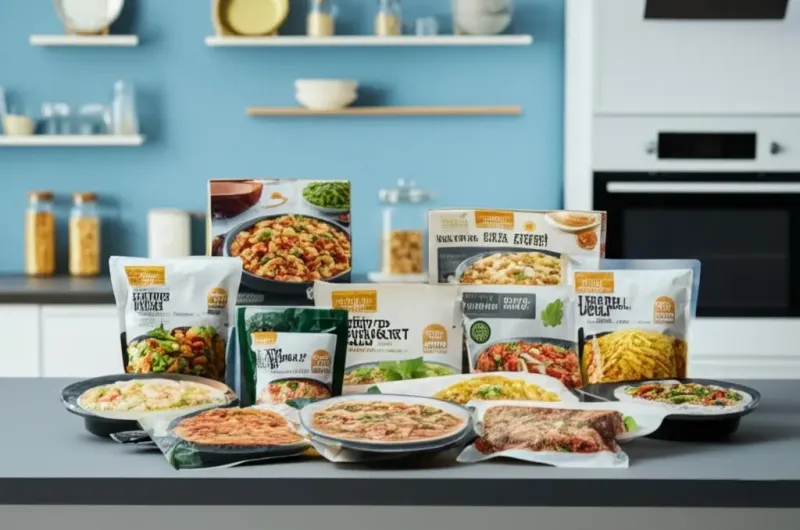
Photo: frozen packaged convenience meals on kitchen counter family dinner, via pakoro.com
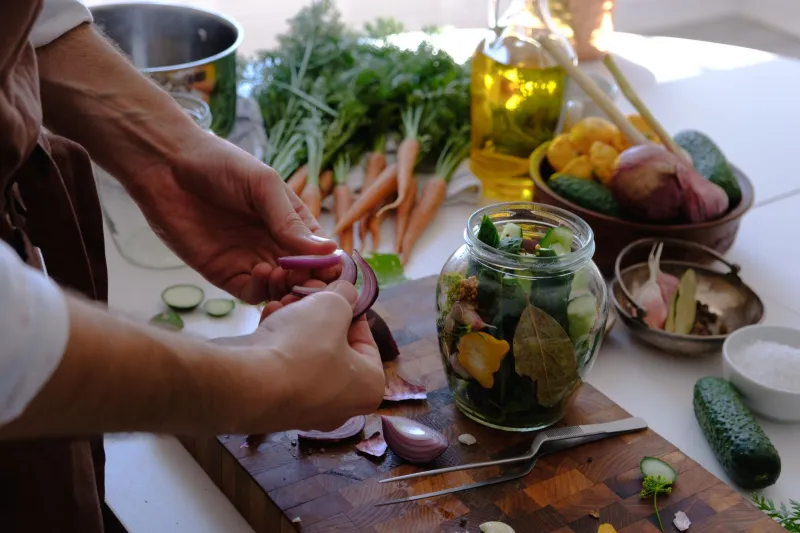
Let me be clear about who's writing this: someone who meal preps on Sundays, ferments her own pickles, and has strong opinions about tahini brands. So when I announced at the dinner table that for two weeks, the family rule would be "ease over purity," my teenager asked if I was feeling okay.
The experiment came out of frustration—with myself, mostly. I'd internalized years of headlines about ultra-processed foods, and it had turned every boxed pasta into a moral crisis. I wanted to know: what actually happens if you let convenience back in, without the guilt? Not according to a study of 100,000 people. According to my house.
The Rules
Simple. For fourteen days, convenience won any tie. Frozen meals were fair game. Boxed mac and cheese, jarred sauces, canned soups, pre-shredded cheese, the rotisserie chicken from the grocery store—yes to all of it. I wasn't trying to eat badly; I just refused to fight for every gram. I tracked four things daily: my energy, my mood, our grocery spending, and how dinner felt.
Week One: The Honeymoon
Friends, I forgot how much time I spend on dinner. Night one was frozen vegetable stir-fry kits and microwave rice—twenty minutes, start to finish, including cleanup. I read a chapter of a novel. A novel! My stress score, which I logged on a 1–10 scale, dropped from my usual weeknight 6 to a 2.
The budget surprised me too. I'd assumed convenience meant expensive, and some of it did—the fancy frozen grain bowls ran $6 a pop. But canned beans, jarred marinara, frozen vegetables, and store-brand mac fed us cheaply. Week one's grocery bill came in about 15% under our normal.
Week Two: The Cracks Show
Then reality set in. By day nine, I felt sluggish in a way I couldn't blame on anything else. My fiber intake had quietly cratered—I tallied it roughly, and I was getting maybe half of what I normally eat. My husband reported feeling "kind of blah" by the second week. The kids, notably, never complained, which told me something about whose palate this experiment was really testing.
The sodium math was also sobering. I compared labels out of habit and found our family sodium intake had roughly doubled, mostly from canned soups and frozen entrées. Nothing catastrophic for generally healthy people, I'd argue—but not nothing.
And a strange thing happened at the table: dinner got quieter. Not peaceful-quiet. Missing-quiet. When I cook from scratch, the kids wander in, steal pieces, complain, ask questions. Convenience food arrived and left without ceremony. We'd gained time and lost a small ritual I didn't realize I valued.
What I'm Keeping (and What I'm Kicking)
Here's the nuanced takeaway I didn't expect: the experiment didn't vindicate whole foods or convenience foods. It revealed that the binary is fake.
The swaps that clearly mattered: Frozen vegetables are nutritionally excellent and cost a fraction of fresh out of season—permanent pantry resident now. Canned beans, jarred tomato sauce doctored with garlic and olive oil, pre-washed greens, rotisserie chicken: all of these deliver 90% of the homemade benefit for 20% of the effort. These are tools, not moral failures.
The swaps that didn't hold up: Fully assembled frozen entrées as a lifestyle. They cost more, delivered less fiber, left everyone hungrier two hours later, and—based on two weeks of data from a sample size of four—seemed to dull our collective energy and our dinner conversation.
The fear-based messaging around "ultra-processed" food flattens a spectrum that's actually quite wide. A bag of frozen edamame and a shelf-stable cheese powder live in the same research category but not in the same universe. When we treat all convenience as contamination, we hand the useful tools back to the takeout apps.
So here's my new house policy, post-experiment: convenience is welcome at the ingredient level and on a guest pass at the meal level. And dinner stays a ritual worth twenty minutes of chopping, because it turns out that part of the nutrition was never on the label.